
Why does childhood trauma keep affecting our adult relationships and parenting?
Updated: 6 days ago
Many of the adults I work with don't arrive describing themselves as someone with childhood trauma. They arrive saying something more like:
"I don't know why I keep pulling away from people I love."
"I lose it with my kids over small things and then feel terrible."
"I promised myself I'd be different from my parents - but I can hear myself saying the exact same things."
"My partner says I'm emotionally unavailable. I don't know how to change that."
These aren't character flaws. They're patterns. And patterns, almost always, have a history.
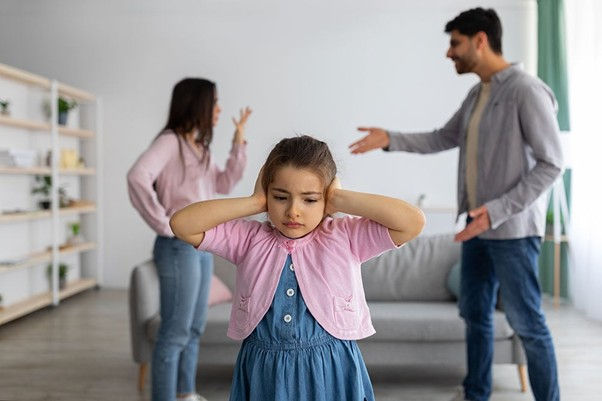
Why do we repeat relationship patterns we don't want?
One of the most disorienting experiences in adult life is finding yourself doing something you swore you never would - and not being able to stop, even when you can see it happening.
Repeating relationship patterns, emotional responses that feel too big or too shut-down for the situation, difficulty feeling close to the people you love most - these experiences are far more common than people realise. And they rarely mean something is fundamentally wrong with you.
What they usually mean is that your nervous system learned something, early on, about how relationships work. About how safe it is to need people. About what happens when you show vulnerability, or anger, or need. About whether the people around you can be trusted to stay.
Those early lessons - laid down in childhood, often before we had the language to make sense of them - become the template through which we experience relationships as adults. They shape how close we let people get. How we respond when we feel threatened or abandoned or overwhelmed. How we parent. How we love.
The patterns aren't random. They make complete sense - when you understand where they come from.
How childhood trauma experiences affect and shape adult relationships
You don't need to have experienced obvious or dramatic trauma for your childhood to be shaping your adult life in significant ways.
For many people, the experiences that have the most lasting impact are subtler - emotional unavailability in a parent, growing up in a household where feelings weren't named or welcomed, learning that love was conditional or unpredictable, being the child who had to hold things together or disappear to keep the peace. These are also examples of childhood trauma that teaches us patterns that repeat in adulthood.
These experiences teach us things. That needing people isn't safe. That expressing emotion leads to rejection or ridicule. That we have to earn love rather than simply receive it. That conflict means danger. That closeness means loss of self.
As adults, we carry these lessons - often without knowing it - into our romantic relationships, our friendships, and our parenting. We might find ourselves:
Pulling away just when a relationship starts to feel really close
Reacting to our partner or child with an intensity that surprises even us
Feeling numb or disconnected when we most want to feel present
Working hard to keep everyone around us happy at the cost of our own needs
Recreating dynamics from our childhood in relationships we chose as adults
None of this is conscious or a choice. It's the nervous system doing what it learned to do - protecting you, in the way it always has, since those early childhood experiences.

When it shows up in parenting
For many adults, becoming a parent is the moment their own childhood trauma rises most powerfully to the surface and affects relationships.
A child's distress can activate our own unprocessed distress. A child's anger can trigger responses in us that belong somewhere much earlier. A child pulling away can touch a wound that has nothing to do with them.
Parents often describe feeling flooded - a wave of emotion that comes from nowhere, a reaction that feels out of proportion, a sudden disconnect from the parent they want to be. Afterwards comes the guilt. The confusion. The fear that they are somehow damaging their child the way they were damaged.
What I want those parents to hear is this: the fact that you notice it, that it troubles you, that you're asking the question - that already matters. Awareness of the pattern is not the same as being trapped in it.
Understanding where your reactions come from doesn't excuse them. But it does make them workable. It creates just enough space between the feeling and the response to begin doing something different.

What counselling for adults looks like
Working with adults on these kinds of patterns is slow, careful work. It isn't about re-living the past for its own sake. It's about understanding how the past lives in the present - in your body, your relationships, your automatic responses - and gradually developing new ways of being in those moments.
This might involve exploring the relationships and experiences that shaped you, understanding your attachment patterns and what they mean for how you relate to others now, noticing the moments in your current relationships where old wounds get activated, and developing a greater capacity to stay present with difficult feelings rather than being swept away by them or shutting them out entirely.
It is not a linear process. Some sessions will feel like significant movement; others will feel like returning to familiar ground. Both are part of the work.
What tends to shift, over time, is not just insight - but something more felt. A greater ease in relationships. A capacity to stay present with your child even when they're dysregulated. A growing ability to notice the pattern beginning, and choose differently.
You don't have to keep repeating what was done to you
The research on intergenerational trauma is clear: patterns do get passed down. The ways we were cared for shape the way we care for others. The emotional environment we grew up in becomes the one we unconsciously recreate.
But transmission is not inevitable. It can be interrupted. And the interruption often begins not with perfection, but with understanding - with someone finally making sense of something that has been confusing or painful for a very long time.
If any of this resonates - if you find yourself wondering why you respond the way you do, or why closeness feels complicated, or why certain moments with your child or partner bring up something that feels much older than the situation - you're welcome to get in touch.
Shivonne Cammell is an Accredited Mental Health Social Worker and trauma-informed counsellor specialising in attachment, intergenerational patterns, and child and family practice. She works with adults, children, and families in Wheelers Hill, VIC and online across Victoria.


